

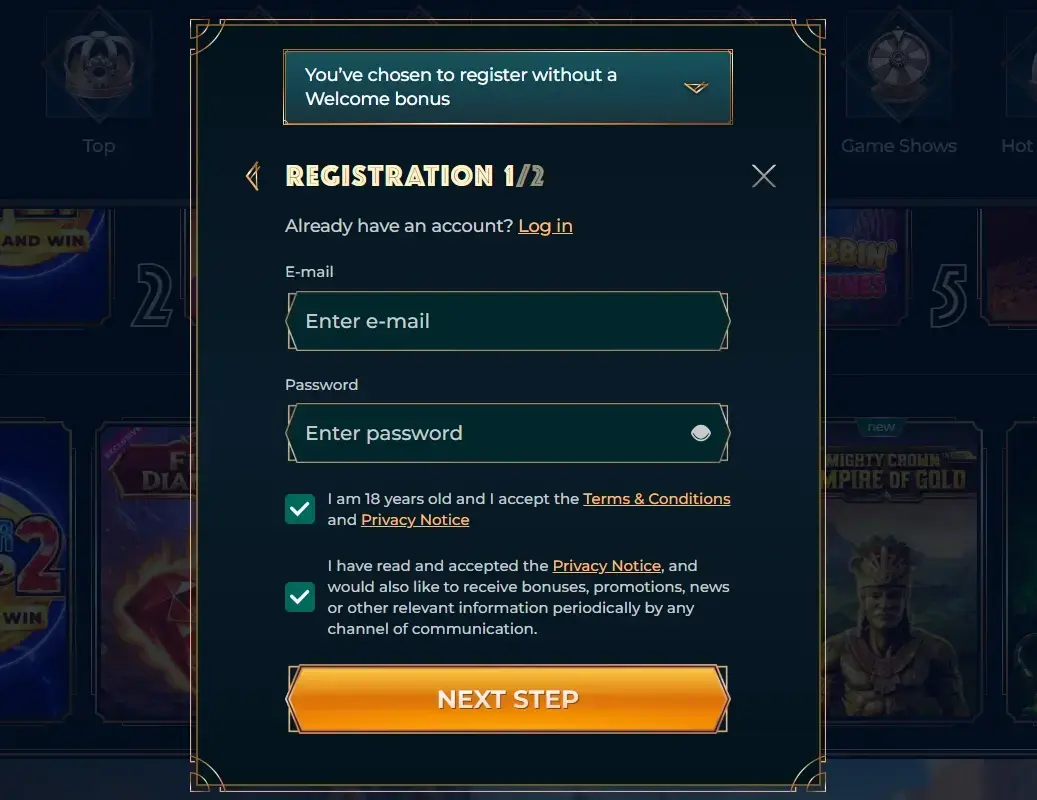
Monsterwin currently exposes an AU-facing registration and account flow, but that technical availability should not be confused with Australian authorisation. The current terms say an account must be personal, registered with correct information and used only by someone who is at least 18 and legally permitted to gamble where they are located. The same terms allow Monsterwin to request identity, age, residence, payment-method and source-of-funds information before or after deposits and withdrawals.
For Australians, KYC is best understood as an account-control process rather than a sign-up benefit. Verification can affect access to withdrawals, account changes and continued use. Current official pages also publish 24/7 support, [email protected] and self-exclusion by email. This page explains what Monsterwin actually publishes, while keeping Australian legal status separate: ACMA has taken 2026 enforcement action against Monsterwin as a prohibited and unlicensed service.
What the current account flow establishes
The AU-facing Monsterwin homepage presents both Log in and Register controls. It also states that real-money play requires a Monsterwin account. That is evidence that an account-entry flow is currently exposed through the Australian-localised path. It is not evidence of an Australian gambling licence.
Monsterwin’s terms say a user must open a personal account to use the site’s full functionality. The account must be registered in the person’s own correct name, and the terms prohibit duplicate accounts under the same person, household or address, phone number or email, and IP address. The terms also require registration information to remain accurate and up to date.
These rules make identity consistency important from the start. Using a false name, a different person’s payment method or multiple accounts can create later problems when the operator compares registration details with KYC and transaction data. The rules below describe the account process without encouraging account creation.
Age and jurisdiction rules
The current Monsterwin terms state that users must have reached the legal age that applies to them and must be at least 18. The terms also place responsibility on the user to determine whether online gambling is lawful in the user’s jurisdiction.
Australia is not named in Monsterwin’s current excluded-jurisdictions clause. That fact should be read narrowly: the operator’s own exclusion list does not name Australia. It does not mean Monsterwin is authorised in Australia. ACMA’s primary records are more important for that question and show that Simba N.V./Monsterwin was the subject of 2026 enforcement for prohibited and unlicensed interactive gambling services.
For the full distinction between technical access and Australian authorisation, see the Australian legal status.
What information Monsterwin says it collects at registration
Monsterwin’s privacy notice says registration data can include an email address, date of birth, country, phone number, gender, full name, social security number, postcode and username. It also states that the site automatically receives an IP address and location data when a user registers.
The exact fields displayed in a registration form can change, and some fields listed in a broad privacy notice may apply differently across markets. The useful point is that registration is not anonymous. The operator links the account to identity and contact information and may later compare that information with KYC documents, payment ownership and location data.
Because those data are sensitive, screen captures shared with support or complaint platforms should be redacted. Passwords, full identity numbers, bank details and full payment credentials should never be posted publicly.
KYC: what the current terms say
Monsterwin’s current General Terms, version 1.12 updated 19 August 2026, contain a dedicated verification section. It says the operator may request information to manage the account, verify identity and establish the source of funds. The published examples include certified identity documents, proof of residence, payment-method ownership evidence and transaction histories.
The same section says additional procedures may be used to verify identity, age, residence and other circumstances before or after deposits and withdrawals. It also refers to additional security checks such as calls, phone checks or face verification when required.
These are official examples from the current terms, not a promise that every user will be asked for every item. KYC requirements are account-specific. A user may be asked for fewer items, additional evidence or a different verification method depending on the circumstances and transaction.
Published KYC timing and why it still is not a guarantee
The current terms state that requested documents and information must be provided within 30 days. They also say Monsterwin will usually verify documents and information within 10 days after the request has been answered in full, while allowing additional time or checks depending on the circumstances and complexity of the case.
That is a current published rule checked directly from the official terms on 21 September 2026. It should not be turned into a guarantee that every verification will finish within 10 days. The wording itself says additional time or checks can be required. A delay can also arise if the operator considers the response incomplete or asks for further evidence.
This distinction matters because recent complaint records include users who reported verification friction. Those reports show that real cases can be more complicated than the headline timetable. They do not cancel the official rule, and the official rule does not prove the outcome of a specific complaint.
How verification can affect a withdrawal
Monsterwin’s terms expressly allow withdrawal processing to be delayed while identity, account balance, source of funds or compliance checks are performed. The operator also reserves the right to postpone payment until verification procedures and checks are completed.
This means a withdrawal issue can be partly a payments question and partly an account-verification question. If a user sees a withdrawal move to review while KYC is requested, the useful next step is to identify exactly what information has been requested and whether the account shows that the request has been completed. Repeatedly submitting different versions of documents without a clear record can make a dispute harder to reconstruct later.
The separate withdrawals covers the financial department timetable, AUD withdrawal thresholds and VIP limits. The verification layer is separated from withdrawal mechanics to avoid duplication.
Payment-method ownership can become part of KYC
The current terms say payment methods used to fund an account must belong to the account holder. The KYC section and privacy notice both indicate that payment ownership and financial information can be checked. The operator may request bank or card statements or other records when it needs to verify ownership or source of funds.
That helps explain why using another person’s card or account can create a verification problem even if a deposit initially succeeds. Registration identity, payment identity and withdrawal details need to be consistent enough for the operator to complete its checks.
For payment-method availability, see the dedicated payments section. The public cashier options can change, so this page does not assume that every payment method commonly used in Australia is supported by Monsterwin.
Support channels currently published by Monsterwin
The Monsterwin AU-facing homepage states that customer support is available 24/7. The official terms and privacy notice publish [email protected], and the site interface also exposes live chat. The privacy notice lists a separate data-protection contact at [email protected] for privacy and data-rights matters.
For an account issue, it helps to keep a concise written record: account username or reference where appropriate, date and time, the transaction or verification stage involved, the exact error message, and what support said would happen next. Do not send passwords or unnecessary full payment credentials in an email.
Recent complaint records show that access to chat does not necessarily mean an account issue is resolved immediately. Support can be the communication channel while a finance or verification team controls the next action. That is why written timestamps and copies of correspondence are useful if the issue later needs to be reconstructed.
Changing account details can trigger extra checks
The terms require account details to be kept up to date. In practice, changing an email address, phone number or payment detail can create a security question because the operator needs to distinguish a genuine update from an account-takeover attempt.
A 2026 AskGamblers complaint described repeated verification steps while the user was trying to change an email address and receive a withdrawal. That is one user’s report, not a universal rule, but it shows why profile changes and KYC can intersect. If an account detail is outdated, document the request to change it and keep the operator’s response rather than assuming the change has been completed because it was mentioned in chat.
Privacy and the data used for KYC
The privacy notice says Monsterwin can collect due-diligence information such as identity-document numbers, proof of address, source of wealth or funds, bank ID and financial details for KYC and anti-money-laundering purposes. It also describes device, IP and usage information collected automatically.
That data set is more sensitive than ordinary website-registration information. A user deciding whether to provide it should read the privacy notice and understand the account context in which it is requested. The operator’s published policy is the available basis for assessing how documents are stored or reviewed.
Monsterwin’s privacy notice says users can contact customer support or the Data Protection Officer about privacy rights. That is a data-protection route, not a substitute for Australian gambling regulation or a guarantee that an account dispute will be resolved.
Self-exclusion and account closure
Monsterwin’s terms state that an account-closure request can be sent to customer support at [email protected]. They also contain a separate self-exclusion clause using the same support email. The responsible-gaming page repeats that a self-exclusion request can be made by email and says the support team will close the account as soon as practicable.
These are operator-level controls. They should not be confused with BetStop, Australia’s National Self-Exclusion Register for licensed online and phone wagering providers. As the trust and legal-status section explains, BetStop does not extend to illegally provided online casino games in the same way it covers licensed wagering providers.
If gambling is causing harm, using multiple controls can be more effective than relying on one account setting. Operator self-exclusion can be combined with banking blocks, device or network blocking tools and specialist gambling-support services where available.
What to do if verification appears stuck
- Read the exact request. Identify which item or action the operator says is missing rather than sending a random bundle of documents.
- Check account details. Confirm that name, date of birth, email, phone and payment ownership are consistent with the account.
- Keep evidence of submission. Save the date, time and confirmation for each document or verification action.
- Ask support for the current status in writing. A clear written response is easier to compare with later updates than repeated undocumented chat sessions.
- Protect personal data. Share KYC documents only through the operator’s current official process and avoid posting them publicly.
- Separate KYC from legal status. Successful verification does not create an Australian licence or change ACMA’s enforcement position.
Common misunderstandings
- “The AU page lets me register, so the service must be legal in Australia.”
- No. Technical registration access and Australian authorisation are separate facts. ACMA has recorded enforcement against Monsterwin.
- “KYC means something has gone wrong.”
- No. Monsterwin’s terms make identity and source-of-funds checks part of the account rules. The issue is whether a specific check is handled clearly and consistently.
- “The published verification time is guaranteed.”
- No. The current terms say documents are usually verified within 10 days after a full response, but they expressly allow additional time or checks.
- “Live chat can approve my withdrawal.”
- The public sources establish support access, not that a chat agent controls finance or KYC decisions.
- “Passing KYC means Australian consumer protections apply.”
- No. Verification is an operator process and does not change the service’s Australian regulatory status.
Practical takeaway
The Monsterwin Australia review provides the broader context. Monsterwin’s current AU-facing site provides a registration and login flow, and its terms require a personal account with accurate details. The same official terms allow broad KYC checks before or after deposits and withdrawals and publish examples of identity, address, payment-ownership and source-of-funds evidence that can be requested. The terms currently state a 30-day deadline to supply requested information and say completed submissions are usually reviewed within 10 days, while allowing extra time or checks for complex cases.
Support is currently presented as 24/7, with [email protected] used for account help, closure and self-exclusion. These operational facts do not amount to Australian authorisation. For Australian regulatory status, see the ACMA and licence analysis; for withdrawals, see the withdrawal section; for current bonus conditions, see bonus terms; and for access from phones, see the mobile experience.